
Anime, Manga, Cosplay & Fantasy Personas: A Warning For Parents
Pulling back the curtain on a subculture that has quietly permeated the lives of millions of children (and adults).


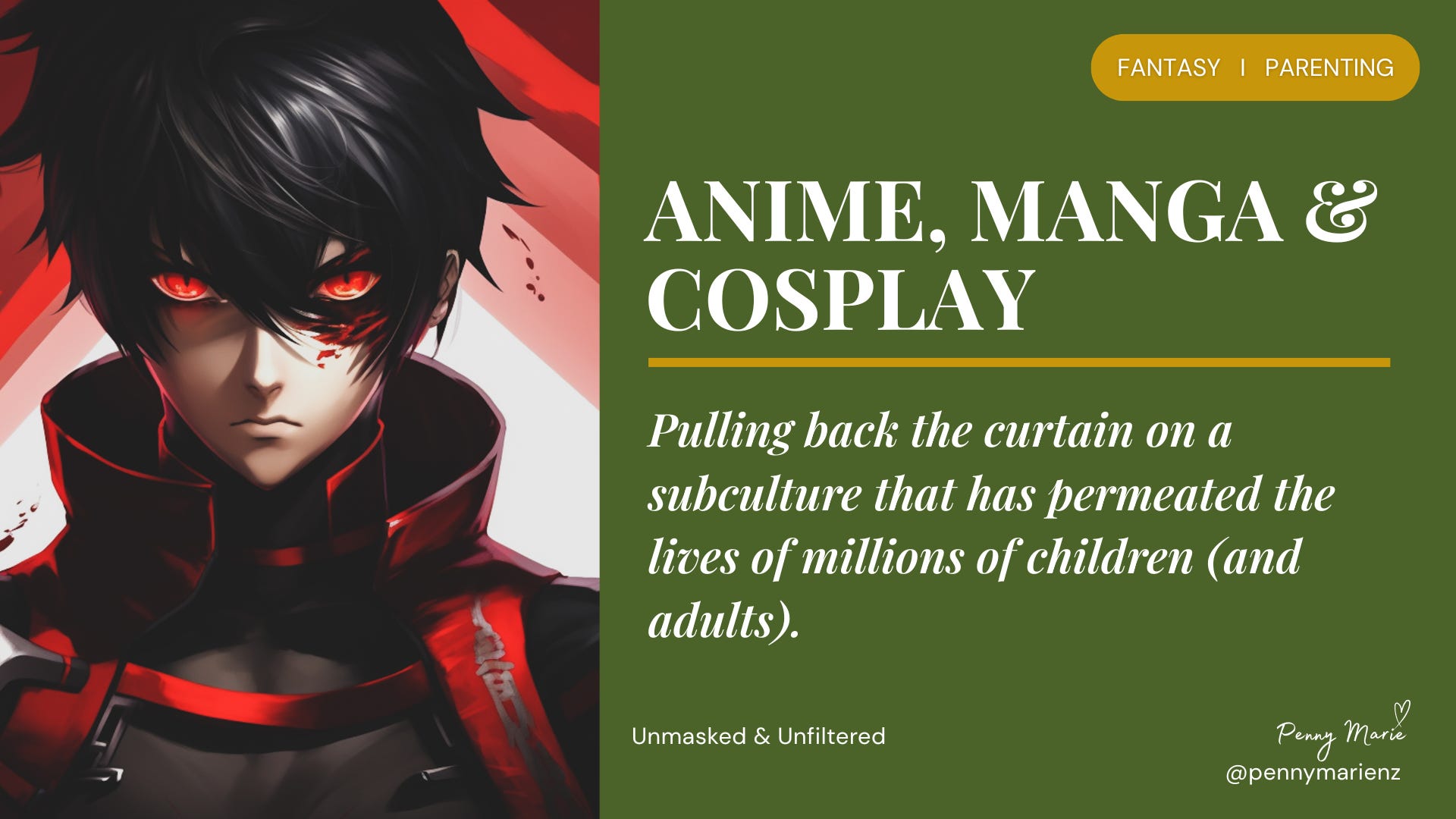
If your loved one is involved with anime, manga, cosplay or fictional identities (such as “furries”), the podcast below is essential viewing.
My dear friend Rhonda Miller in Texas hosts a podcast series Unmasked & Unfiltered. With Rhonda’s permission I am republishing this episode on the world of personas and fantasy that has enraptured many of today’s youth (and adults).
In an episode of Unmasked & Unfiltered, host Rhonda Miller sat down with researcher and advocate Crystal Risotti to pull back the curtain on a subculture that has quietly permeated the lives of millions of children: anime and manga. What often appears to parents as harmless cartoons or comic books may, in fact, be a gateway to complex identity struggles, sexualised content, and a departure from faith-based and family values.
Crystal’s first-hand experience
Crystal Risotti does not speak from a place of mere academic interest; she speaks from the painful perspective of a mother who has lived through the consequences of these influences. Crystal describes herself as having been “asleep at the wheel” during her son’s middle school years, dismissing his obsession with anime lines and themes as him simply being “weird” or “obnoxious”.
It wasn’t until her son underwent a “gender transition” that Crystal began a deep dive into the media he had consumed. She describes the experience as a “mourning of a death,” stating that her son will never again be the child she raised. Her mission now is to ensure other parents are “sober” about the risks, hoping to spare them the hurt she has endured.
“In 2023, 50% of the global anime audience is female while Gen Z makes up 60% of new fans.” - Gitnux
Why parents must tune in
Crystal highlights several critical reasons for parental concern:
The “slow burn” strategy: Content creators often hide explicit or troubling themes several episodes into a series. A parent might watch the first few episodes and find them acceptable, unaware that episode 23 or 56 contains drastically different material.
Targeting vulnerable youth: The subculture often acts as a “safe space” or “warm fuzzy unit” for children who feel like outcasts, particularly those on the autism or ADHD spectrum, migrants or lonely children who feel ‘different’. (Lets face it, most of us went through periods of uncertainty and felt like we didn’t ‘fit in’ when we were younger - and most times resilience, support from our families, and experiencing the world around us, helped us navigate our way through).
Cult-like dynamics: While these communities embrace children initially, they can be quick to ostracise anyone who attempts to leave the subculture or detransition.
Behavioural shifts: Crystal shares a personal anecdote of her son, usually calm and melancholy, “bouncing off the walls” after just one 30-minute Pokémon video, illustrating the extreme neurological effect this high-action media can have on young minds.
The connection to LGBTQ+ and fictional identities
This podcast makes a strong connection between the anime subculture and the push toward LGBTQ+ identities. Crystal points to specific genres like Yaoi (or “boy love”), which focuses on gay male relationships, as evidence of how these themes are normalised for young viewers.
Furthermore, the culture of “cosplay” - blending costumes and play - can lead into the “furry” community, where individuals adopt animal personas. Crystal and Rhonda argue that these fictional identities and sexualised themes are part of a broader effort to destroy the “moral fibre” of the United States, often funded by the same interests that pushed the Kinsey reports. The Let Kids Be Kids article below has more from Rhonda about Alfred Kinsey.


A call to vigilance for parents
Standing firmly on her Christian faith, Crystal emphasises that parents cannot allow their children to be ruled by “worldly fantasies” while pursuing a spiritual life. Citing James 1:8, she warns that a “double-minded man is unstable in all his ways,” suggesting that the instability seen in modern youth mental health is directly fed by these immersive, often dark, fictional worlds.
Parents are encouraged to move beyond the surface level of “cartoons” and recognise the deep-seated spiritual and psychological risks inherent in these Japanese-originated subcultures.
References
Crystal references the following throughout this podcast.
Has your child been impacted by the world of Anime, Manga, Cosplay?
Impacts of anime, gaming, and cosplay is not yet well documented in NZ. Contact Let Kids Be Kids if you have experienced what Crystal describes, and would like to share your story or request support.
When I investigated ‘Lil Gay Out’ the annual ‘LGBTQ’ event at Hobsonville Point Secondary School last year, I noted that cosplay was part of the days’ programme. My investigation (below) led to the cancellation of this event.
Investigation into Lil Gay Out..
On the event cancellation, with Leah on The Platform NZ...
Penny Marie
Penny Marie is an independent researcher and investigative reporter, and the Founder of Let Kids Be Kids NZ.
 | A guest post by
|