
From Tauranga To The War Machine: What Are We Really Celebrating?
Top accolades at the Tauranga Business Awards 2026 goes to a company whose success is tied to supplying the Ukraine war. I ask how this sits with New Zealanders, really.


At the 2026 Tauranga Business Awards, Bay of Plenty defence‑tech company SYOS was crowned Business of the Year and hailed as proof our region now plays on the world stage of innovation and export growth.
Look more closely and an uncomfortable reality emerges: the flagship achievement we’re applauding is supplying “mission‑ready, combat proven” drones into the Ukraine conflict and into New Zealand’s own re‑armament programme, under a Defence Industry Strategy that explicitly marries war‑fighting capability with economic growth and export ambition.
“Prime Minister Starmer… announce(s) UK contracts worth £30m for drones produced by SYOS Aerospace, a New Zealand uncrewed vehicle manufacturer based in Hampshire to support Ukraine”. UK Gov Press Release, 21 April 2025
Is this really the pinnacle of New Zealand enterprise? Is this the best we can imagine for our brightest engineers, our local economy, and our children’s future?
The awards night that plugged Tauranga into a global conflict

The Tauranga Business Awards are run by the Tauranga Business Chamber with mainstream sponsors and an independent judging panel focused on growth, innovation and community impact.
Nothing on the surface screams geopolitics, yet the choice of winner is inherently geopolitical.
The company taking top honours has become a key supplier of uncrewed systems across air, land and sea to foreign militaries and now to the New Zealand Defence Force (NZDF). Its drones form part of a UK‑led package of “support” for Ukraine and are explicitly described by both governments as combat‑tested systems that have already seen operational use in that war.
Judith Collins, as Defence Minister, announced that NZDF will buy and trial these “advanced uncrewed systems” from the company as part of a new Defence Industry Strategy, highlighting that the technology is “central to modern military operations” and that the aim is to build a “strong, resilient industry that delivers economic growth and grows our export markets.”
Translated: Wellington wants local firms to scale into the global military‑industrial supply chain, and Tauranga’s Business of the Year is a model student.
I speculated on Collin’s and the NZ Govt’s pro-Ukraine stance here…

“Good jobs” on the back of bad wars
The employees inside these firms are not villains. They are local people, with families, trying to pay a mortgage and give their children a future in a country where one income almost never stretches far enough.
From their vantage point, this industry looks like a rare bright spot:
Highly skilled engineering work in Mount Maunganui instead of overseas.
Export contracts tied to the UK Ministry of Defence and allied partners.
New NZDF orders endorsed from the Beehive, with ministers promising “economic growth” and local resilience.
“These drones will be provided to support Ukraine. This procurement forms part of the UK’s assistance package and reflects an area of bilateral industrial cooperation. Prime Minister Starmer also welcomed New Zealand’s recent increase in defence expenditure, and both leaders discussed the broader connection between defence investment, national economic security, and household-level economic outcomes.” - Global Defence News, Army Recognition Group. 23 April 2025
These are ordinary New Zealand families, whose financial security now rests on these defence contracts. They did not design the Ukraine war, Project NYX, AUKUS, or the “contested world” narrative that now justifies constant re‑armament. They are simply surviving inside the system presented to them.
And that is where the heartbreak lies.
When a small country like ours allows its economic life to be tethered to distant, unwinnable and corrupt conflicts, we normalise the idea that the safest way to provide for our children is to help other people fight, surveil, and manage theirs.
How the Defence Strategy makes war an economic habit

Defence officials avoid the word “war” and prefer “capability” and “partnership.”
“New Zealand needs to build resilience in its supply chains, including by growing national and regional economies and local suppliers as well as our export markets.” - NZDF Defence Industry Strategy 2025, pg4
In Collins’ own words, this deal is about ensuring NZDF can “protect our people into the future,” reducing supply‑chain risk, and “building the future” with “innovative Kiwi products” developed and supported here. The Defence Industry Strategy she cites is designed to deliver the Defence Capability Plan and “grow our export markets” by bringing together local and international defence primes into a permanent industry ecosystem.
Once you join those dots, a pattern appears:
The same drones now trialled here are literally marketed as combat‑proven in Ukraine.
The “capability” frame makes it much harder, politically, to challenge either the foreign policy or the economic dependency that flows from it.
Any future call for de‑escalation or a more independent NZ foreign policy will run up against a new argument: “But what about the jobs? What about our export story?”
That is how war shifts from an exception to a habit: quietly, bureaucratically, with a strategy document and an awards night.
Hungary PM Orbán says his rival received illegal funding from Ukraine
The Ukraine war itself is hardly the tidy morality play our politicians like to invoke. In Europe, Hungary is now declassifying a national‑security report that Prime Minister Viktor Orbán says will show his main political rival Péter Magyar received illegal funding from Ukraine, even as Brussels and Kyiv pressure Budapest to keep money and weapons flowing.
Whatever you think of Orbán, the fact that this war is now entangled with covert political financing, election interference claims and energy blackmail should make us wary of building New Zealand’s economic future on supplying “clean” hardware into such a murky project.
Talent captured – when innovation serves the wrong story
What makes this even sadder is that New Zealand has seen other futures before.
I recently procured American science and innovation magazines from the early 1900s – pages of optimism and innovation about aviation, electricity, civil engineering, agriculture, medicine. The promise was that new technologies would expand human freedom, shorten the work week, and allow families to live well on a single income in thriving communities.
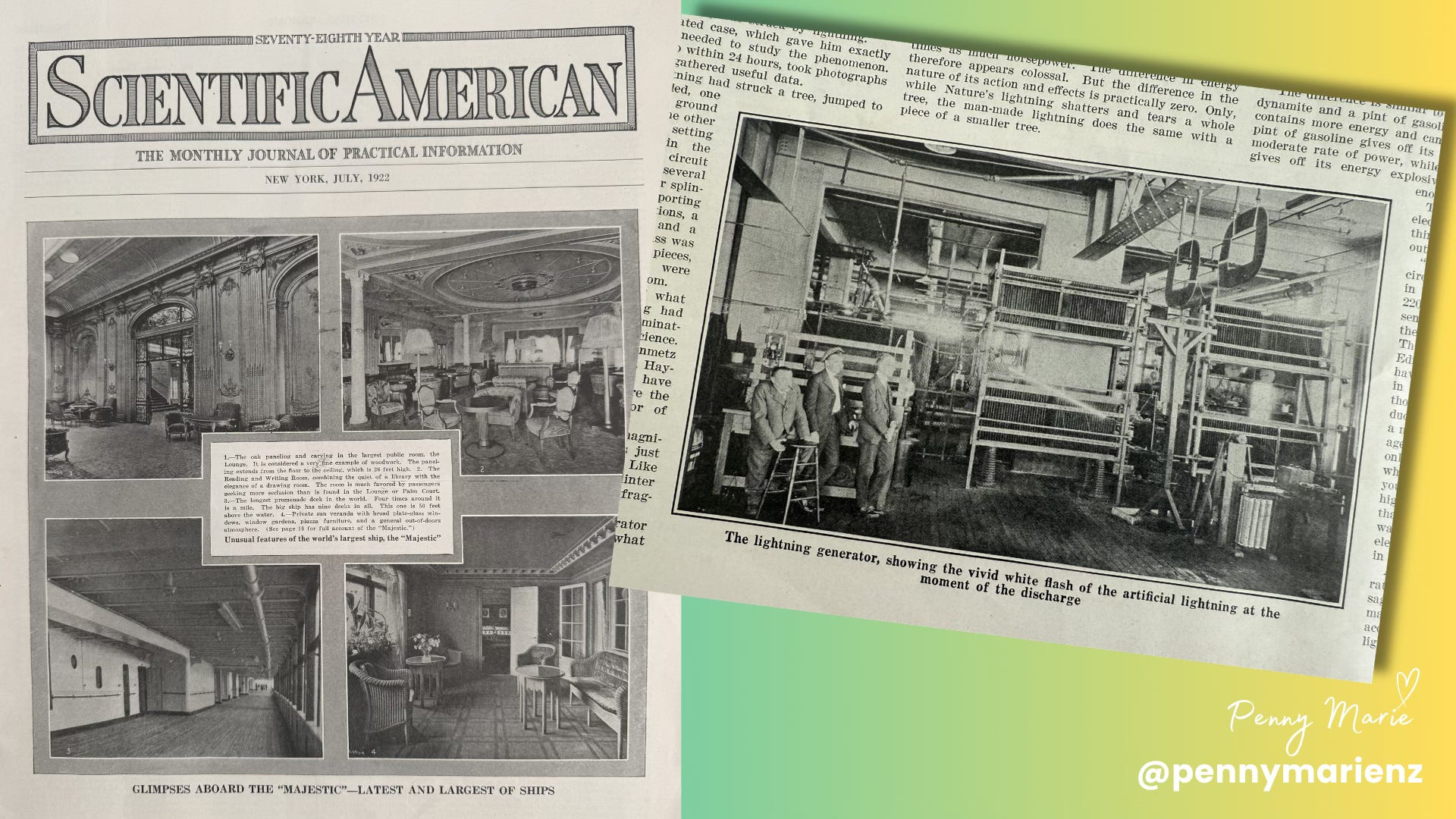
These magazines are a time capsule of a civilisation that still believed its best engineers should be building bridges, power plants, railways, ships, and hospitals – not just perfecting machines for distant battlefields.
The underlying technical imagination in Tauranga today is no less impressive. But the story it has been captured by is different.
The same multi‑domain systems now branded as “mission‑ready” for Ukraine and for NZDF exercises could, with different incentives, enhance the lives of New Zealanders, and be focused on for example:
Inspecting and maintaining critical infrastructure in remote areas.
Coastal protection, fishery monitoring, and anti‑poaching operations.
Rapid disaster‑response logistics in floods, earthquakes and severe storms.
Precision agriculture, pest control and farm logistics to boost food security.
The difference is not in the engineering. It is in the purpose.
Right now, the clearest and best‑funded narrative on offer is the one that says: there will always be another contested theatre, another allied operation, another integration with foreign fire‑control systems – and we can make good money helping to supply it.
A human economy: One income, one nation, many possibilities
On the other side of the world, the current US administration has chosen a different story to frame its economic policy.
Its stated aim is to rebuild domestic manufacturing, unleash domestic energy – from oil and gas to nuclear – and onshore critical supply chains so the country is less dependent on foreign powers and global technocrats.
Underneath the slogans about sovereignty is a simple human goal: drive down the cost of living and raise real wages so that a family can again choose to live on a single income if it wants to.
Whether you agree with every Executive Order or not, the principle is clear: production for people at home first, alliances and abstractions second.
Imagine if New Zealand adopted that goal and applied it to our own strengths and abundant resources, minerals and energy sources.
Instead of celebrating export wins from drones in a grinding European war, we could deliberately channel our “world‑class” talent into:
Cheap, abundant domestic energy to lower every household’s bills.
Advanced construction, transport and communications that cut the cost of housing and commuting.
Food and health innovations that actually reduce the burden of disease, not manage it indefinitely.
Civilian applications of robotics and autonomy that protect our land and seas and free up people’s time.
That is how you create a country where one parent can work and a family can still thrive: you build an economy that serves human flourishing here, not war‑fighting there.
Would more New Zealanders stay if they believed that’s where we were heading – towards a peaceful, sovereign, family‑first economy – instead of clinging to the idea that our best shot at a decent wage is plugging into Britain’s and NATO’s forever wars?
Rethinking what “Business of the Year” should mean
A local awards night may seem small compared with defence strategies and global conflicts, but it tells us what we are teaching the next generation to admire.
Right now, the message from Tauranga is: if you want to be celebrated, build things that fit neatly into the security architecture of an “increasingly contested world.”
I’m suggesting a different standard.
What if “Business of the Year” in New Zealand meant:
You lowered the cost of a decent life for ordinary families.
You reduced our dependence on hostile or unstable foreign powers.
You built tools for peace, resilience and prosperity, not for the next theatre of war.
We have not always lived in a world where militarised innovation was taken for granted. Our grandparents could still imagine a civilisation where new machines meant less fear, less scarcity, and more time with the people we love.
We can choose to imagine that again.
The question is whether we have the courage to say, out loud, that building our economic future on war and surveillance is not “world‑class” at all – and that New Zealand can do better, for our families and for the generations yet to come.
FOOTNOTE: I hope this article gets into the hands of investors and visionaries who are in the market to approach SYOS and similar NZ-owned companies, to enhance humanity via innovation and excitement for the future…
Penny Marie
Your support is extremely appreciated thank you! One-off support of $10 or more,
It's all well and good to preach morality, when it is not your own job or industry that is at stake.
Yes, you can offer alternatives, but we are a small country with limited resources.
Just because they make combat drones does not mean they ultimately can't pursue the more "kinder" options you suggest, but let's face it, we need investment to provide the means for research and development.
This is no different to Kiwisaver choosing not to invest in fossil fuel for its Kiwisaver clients.
Yes, the war in Ukraine is corrupt, but deep down what war isn't?
SYOS web landing page sings a typically kiwi song supporting agrarian technology advancement. 35 yrs ago I visited John Deere manufacturing plants in the mid west of the USA and tucked in the back corner of a shed big enough to fit most of Tauranga into was a restricted area where everyday JD equipment like diggers and bulldozers were modified for military use.
If we wanted to take some high ground then we should stop selling or buying from China but pure pragmatism dictates otherwise.
Before the military industrial complex we bludgened ourselves with sticks and rocks, so let's celebrate success for the many kiwi innovators who can get a toe hold in the global market