
UN General Assembly Says 'Sexual Orientation & Gender Identity' (SOGI) Is NOT A 'Disability'
The 'UN Convention On The Rights Of Persons With Disabilities' (UNCRPD) will NOT include SOGI, but New Zealand voted to include it.


Something quietly happened at the United Nations just before Christmas, that may be a BIG set-back for TQ lobbyists (and a win for everyone else)…
It also shows, in black and white, that UN decisions and New Zealand’s diplomats are shaping the rules that later appear in our laws and policies.
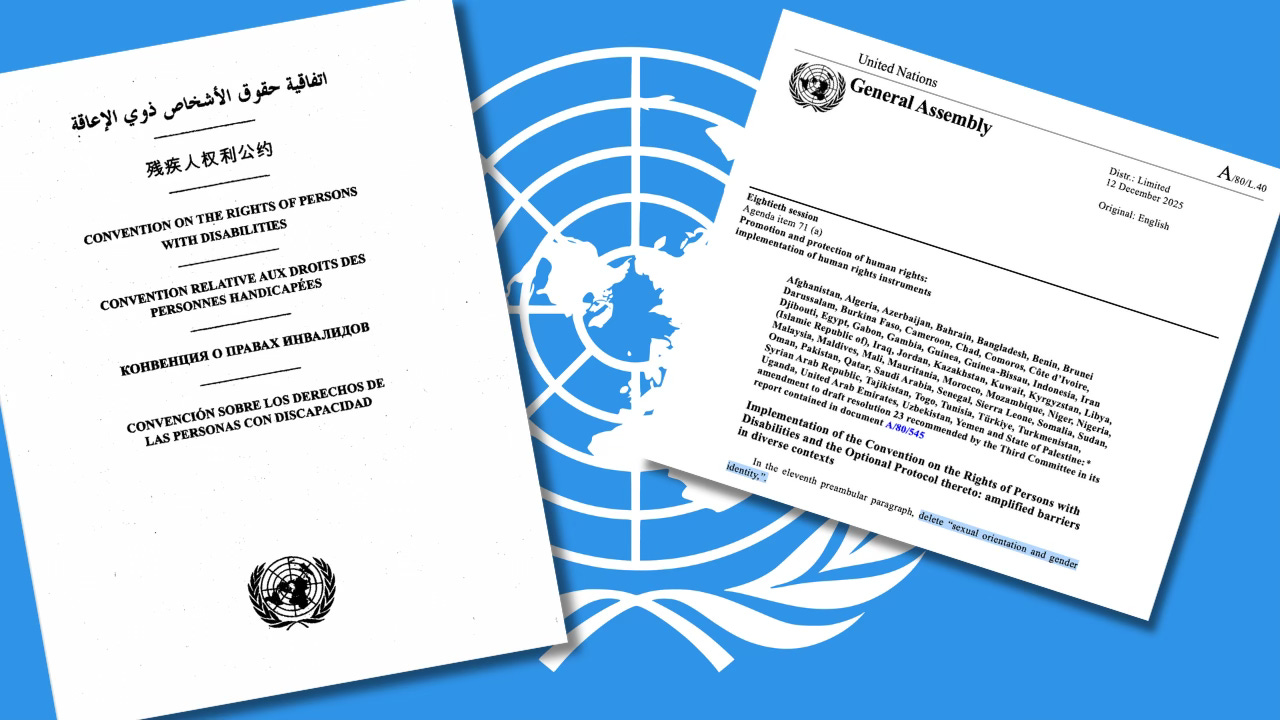
“In a historic victory for pro-family nations and the Trump administration, the UN General Assembly voted to remove “sexual orientation and gender identity” from a UN resolution for the first time.” - C-Fam
If you’ve ever been told that UN influence in New Zealand is a ‘conspiracy theory’, this vote and New Zealand’s role in it are a concrete, documented example of how it actually works.
What the UN vote was, and how NZ voted
At a United Nations General Assembly meeting on 12 December 2025, some amendments to the Convention on the Rights of Persons with Disabilities (UNCRPD) were decided on.
The RESOLUTION to adopt changes to this Convention was co-facilitated* by New Zealand and Mexico. Included in the suggested changes was ADDING ‘sexual orientation and gender identity’ in the preamble as a ‘protected ground’.
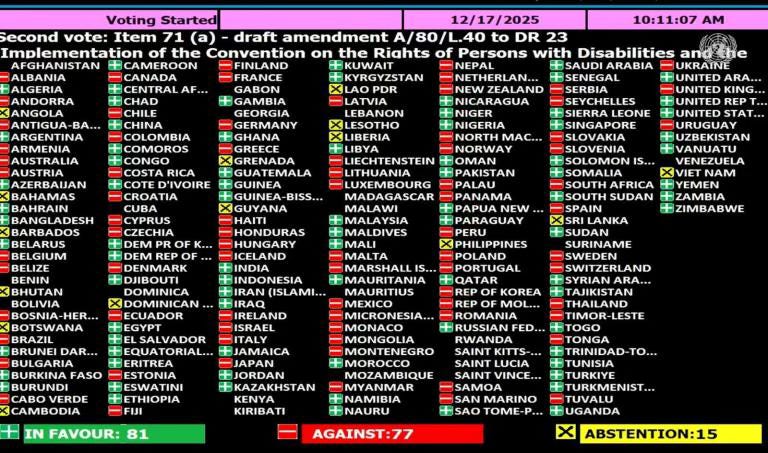
An AMENDMENT to the resolution, sponsored by Egypt* - to exclude the suggested words ‘sexual orientation and gender identity’ was PASSED with votes of 81–77–15 in plenary, after a tie and an earlier defeat in Third Committee.
New Zealand voted AGAINST the amendment. (i.e. NZ supported keeping SOGI language in the disability resolution). See the voting record on this amendment:
*“The resolution, co-facilitated by Mexico and New Zealand, addresses vital issues including accessibility, inclusive education, and the rights of persons with disabilities in situations of risk. These protections apply to all persons with disabilities, including those who are LGBTQ”. - Outright International (a pro-TQ, UN affiliated organisation)
Supporters of SOGI language argue it simply recognises that disabled people can face extra barriers if they’re also discriminated against for being gay or trans.
Note: This is one small win within the UN matrix. By no means a turnaround.
What does this mean?
It appears to mean that the updated version of the Convention on the Rights of Persons with Disabilities will not specify ‘sexual orientation and gender identity’ as grounds for discrimination relating to disability. Despite FIERCE lobbying.
While the suggested (and voted down) wording technically would have listed SOGI as a ground of discrimination rather than saying ‘SOGI is a disability’, in practice it lumps sexual identity issues into the disability framework, with legal and funding consequences.
Championed, it seems, by none other than New Zealand, among other nations. One factor in the change in voting was likely due to changes in the US Administration, which influenced more nations to change their vote.
Who is the New Zealander pushing the voting button at the UN General Assembly?
An OIA request has been send to MFAT asking who it was. But it was likely Shannon Tau, Counsellor, Permanent Mission of New Zealand to the United Nations. Whether or not it was Tau physically pressing the button, the point is that New Zealand’s official position was to support including SOGI language in the disability resolution.
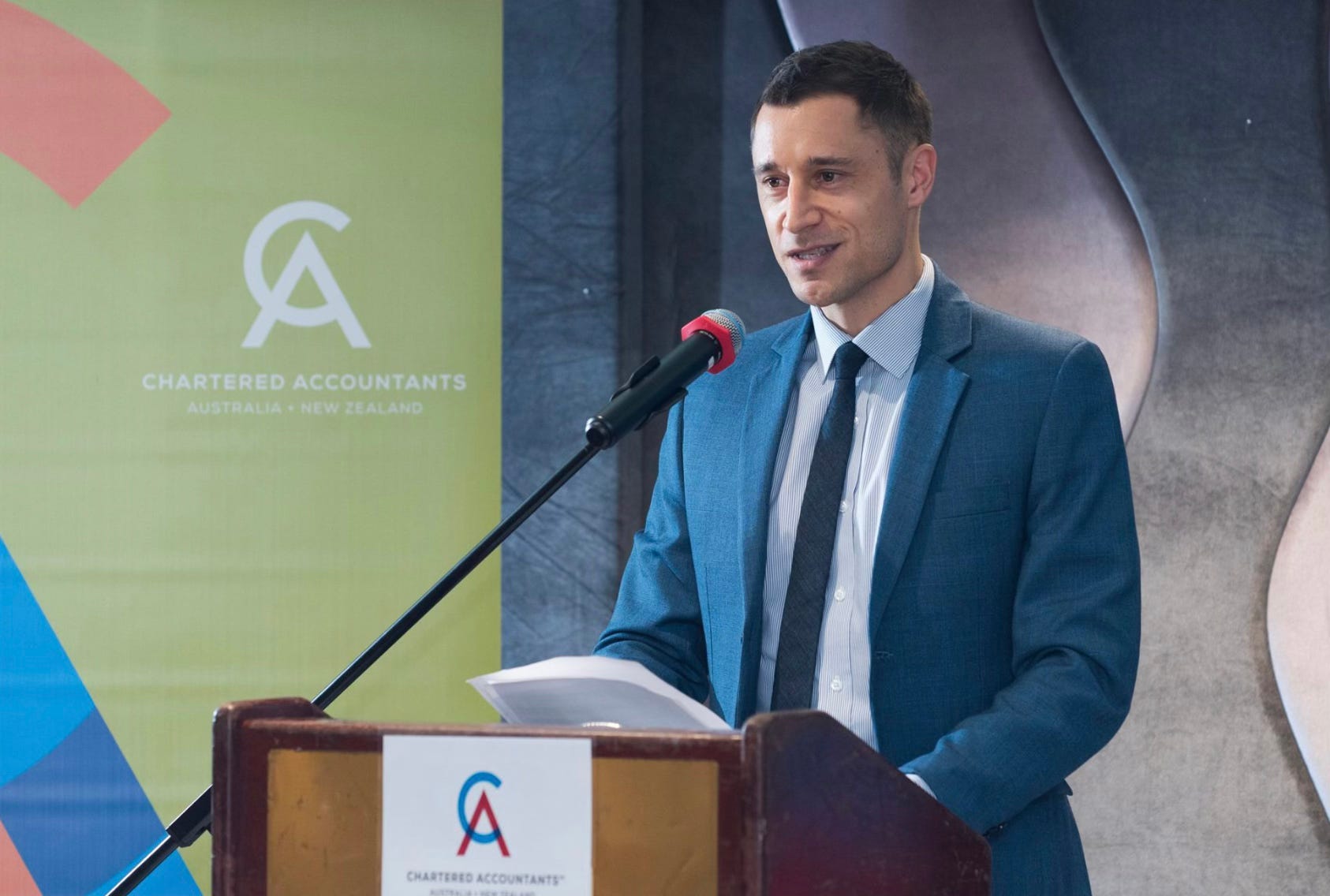
On 7 October 2025 Tau made a UN ministry statement and speech…
“We reaffirm our commitment to working collaboratively with Member States, civil society, and the UN system to deliver meaningful outcomes for all. In our multilateral engagement on human rights, we are particularly focused on advancing the rights of persons with disabilities, advancing women and girls rights, abolishing the death penalty, combating discrimination against the LGBTQIA+ community, preventing torture and arbitrary detention, and safeguarding freedoms of religion, belief, and expression.
“This year, New Zealand is refreshing its national Disability Strategy. The proposed vision for the Strategy is New Zealand as an accessible and equitable society for disabled people and their families and whānau – a place where disabled people thrive, lead, and participate in all aspects of life. Disability rights and inclusion are also central to our International Development Cooperation programme, with 22% of our development initiatives pursuing disability inclusion as an objective.” - Shannon Tau
Pro Trans/Queer (TQ) Lobbying
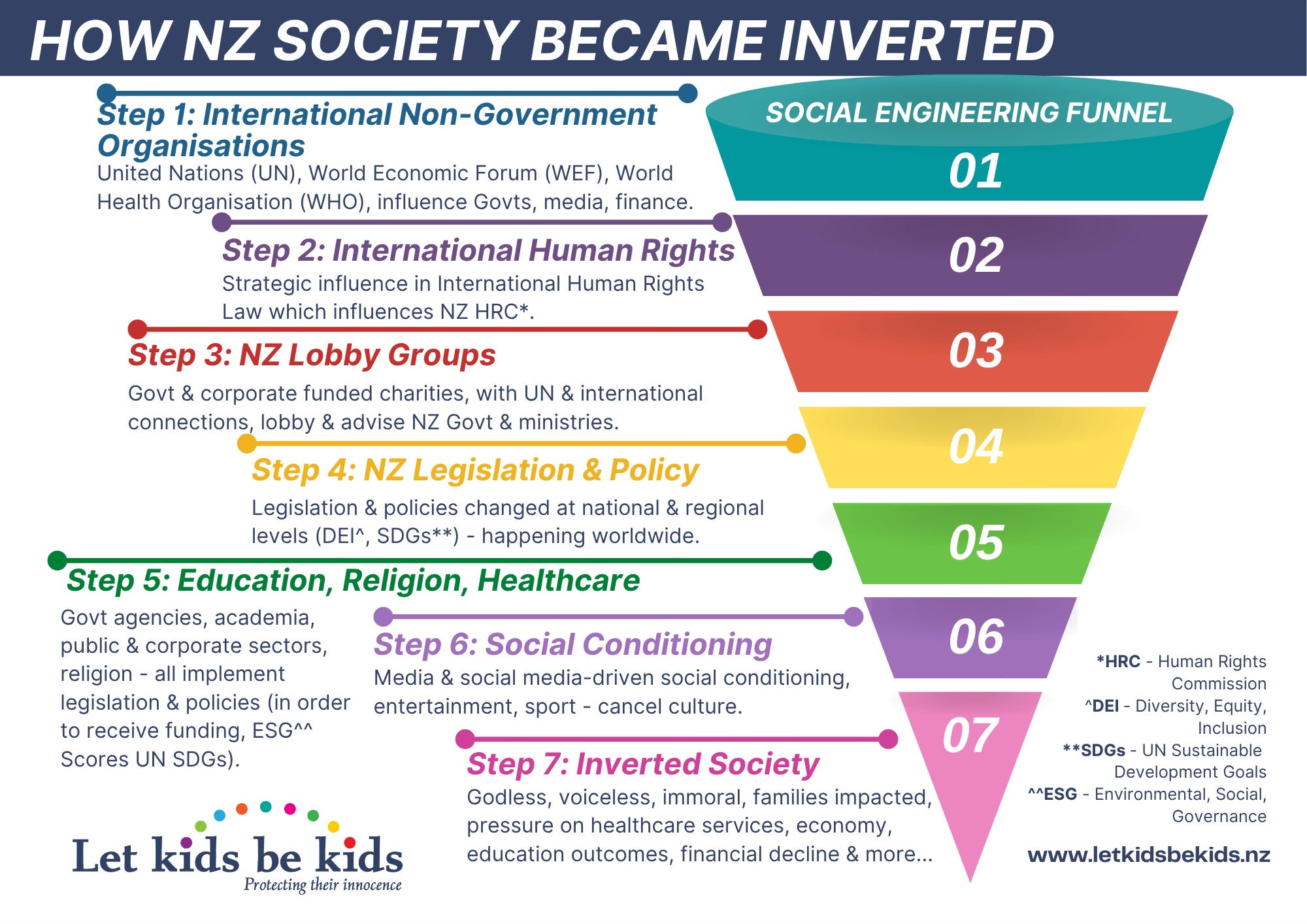
This diagram explains how lobby groups influence legislation and policy. Remember, they often receive government funding, and are exempt from tax.
‘Sexual Orientation’ is not a disability.
During my presentation at the New Zealand First Convention in 2025 I asked people to THINK. What does ‘sexual orientation’ mean to you…
Now think… why would anyone need sexual orientation to be labelled a ‘disability’?
‘Gender Identity’ is not a disability.
It can’t be. Because ‘gender identity’ is made up. It’s not real. Gender identity’ is a political concept, not an objective medical condition. Treating a contested idea as if it were a disability category is profoundly dangerous. Here I explain the TQ industry’s definition of ‘gender identity’…
Why is this important?
INFLUENCE: While there are currently no SOGI descriptors within NZ’s Disability Strategy, UN frameworks and domestic strategies create pressure for intersectional funding and we can now see that NZ contributes to creating this influence.
MONEY: The government has a budget for assisting organisations that provide services for people with disabilities. This money should be for people with actual disabilities. Instead of wanting to be grouped in with people with disabilities, these people need therapy and cold hard facts to come back to truth. That is healthier than ‘gender affirmation’. But they can’t get this sort of help, due to the Conversion Practices Prohibition Act 2022. Which the TQ lobby forced into law. ‘Gender Identity’ is not a ‘disability’. It’s a social contagion that has been artificially created through policy changes, media promotion and the education system.
REDEFINING ‘DISCRIMINATION’: Under UNCRPD, people with disabilities cannot be discriminated against. If SOGI was a classification of people that cannot be discriminated, it means a further shut down on free speech - no more being able to speak biological truth and common sense.
2026 IS AN ELECTION YEAR IN NZ: The ongoing issues around TQ will certainly be a key election topic. As parents, grandparents and intelligent people, we must stand up for our children and right this ship. And we must call out the exorbitant waste of money, energy and human resource, not to mention negative impacts, of SOGI and the TQ political movement.
Ministry of Disabled People

Currently there is no specific categorisation of ‘sexual orientation and gender identity’ or LGBTQ within the NZ Ministry of Disabled people. However, NZ’s co‑facilitation role at the UN and its explicit commitment to LGBTQIA+ rights in disability fora make it clear this is the policy direction officials are steering towards.
Does this UN vote to not include SOGI into it’s terms, mean that the LGBTQ industry will not be able to get their hands on money they would have liked, from the pot allocated to disabled people? I hope this is the case. Signs definitely point to many groups assuming SOGI was about to be included in UNCRPD.
Given Whaikaha is rolling out it’s 2026-2030 Disability Strategy, given Tau is strongly in support of LGBTQ and given NZ’s role in co-facilitating the resolution on changes to UNCRPD… I think we can join the dots on what ‘they’ wanted to have happen.
Vulnerable children are targets of TQ ideology
Autistic people are not born in the wrong body. The last thing they need is to be told this could be so. They need love and acceptance for HOW THEY ARE. Not encouragement to change their identities and bodies in order to ‘be comfortable with themselves’.
See my chat with autistic Colorado man Sven, who explains how Autistic NGOs in the US have become ‘social justice’ agencies pushing trans ideology on autistic populations. (NZ is heading the same way).

“The resolution on disabilities specifically addressed mental disabilities, which raised the danger of vulnerable children with disabilities being exposed to transgender ideology. Girls on the autism spectrum have been shown to be highly vulnerable to exploitation by doctors and clinics in the transgender industry.” - C-Fam

What else might it mean?
It might mean that the contrived narrative that the LGBTQ activists have spent billions of $$ and many years carefully crafting, that tells the world that they are victims in a world that doesn’t love them enough… just had the wind taken out of their sails.
Nations around the world are pushing back. Of note, some of the nations that voted NO to SOGI in UNCRPD are Islamic nations. And… this is a hard pill to swallow… some of the nations pushing trans ideology the most - are supposedly Christian nations.
A caution: We don’t want an extreme swing of the pendulum
There is a world of difference between consenting adults living their private lives, and a system that uses UN language to justify medicalising distressed kids or redirecting disability funding into ideology.
The global trans/queer industry has caused irreparable harm and syphoned eye-watering billions of dollars away from real worthy causes and groups that need support.
What we shouldn’t want to see occur is an extreme swing to the right, that risks putting consenting same-sex attracted people in danger. By including ‘LGB’ into their ‘TQ’ brand, they give the illusion of representing all gay and lesbian adults, many of which mind their own business and do not want to be affiliated with the TQ.
As covered in earlier investigations, some TQ organisations have promoted material and events that most parents would reasonably see as sexualised or inappropriate for children. This isn’t behaviour that represents most in LG community. And… it’s not a disability.
Sexual Orientation and Gender Identity
The terms ‘SEXUAL ORIENTATION AND GENDER IDENTITY’ (known as SOGI) were adopted into United Nations policy in 2008. Since then there has been growing concerns about these controversial terms… with concerns becoming very amplified since around 2018, when it became apparent they were within our education system’s ‘health’ programmes and marching into law worldwide. See my previous investigations into Relationships & Sexuality Education (RSE) which comes directly from the United Nations Comprehensive Sexuality Education (CSE).
In 2023 I became aware of the significance of these terms. Since then it’s been rabbit warren after rabbit warren of disturbing findings. Which lead to having the opportunity to speak at the New Zealand First annual convention in September 2025:
Why globalisation? Why does this resolution matter?
This is how ‘globalisation’ actually works. First, UN bodies normalise new terms like SOGI. Then diplomats from countries like New Zealand champion them in resolutions. Next, ministries like Whaikaha build those ideas into national strategies and funding. Finally, charities and lobby groups, often funded by government, push them into schools, health services, and law.
The big question for us all should be, why is the United Nations having such an influence in policy in New Zealand (or any other country, for that matter)? And why are charities getting govt funding to push these UN ideas into law?
As we go into an election year, this is a significant question that our MP’s must be able to provide adequate answers to. They need to remember who they serve. They serve us. The workers, the families, the everyday kiwis. Not the UN, not the investors, and not the lobbyists.
NOTE: **(Egypt is one of few countries who have so far stopped the influence of LGBTQ into their country, see UN-affiliated Outright International, an LGBTQ agency dashboard on LBTQ ‘rights’ there. Compare with ‘progressive’ New Zealand).
I am an independent researcher and reporter. I survive and thrive on the support of people like you. If you would like to support me, I’d really appreciate you, thank you!
- One-off support of $10 or more
- Monthly support: $10, $25, $50, $100, $250, $500.
 | A guest post by
|
This is a massive article Penny-Marie. I really appreciate the effort you put in to finding out who what and why things are shaping up this way in our country (and others). Thank you.
If it didn’t wholly originate there, almost every policy New Zealand puts into place is at least shaped by one or another UN resolution, framework, or “best-practice” guideline (think, for example, NZ Curriculum). Understanding the UN and its structure, power dynamics, and the sociopolitical and religious/ideological alliances is essential to understanding the current global turmoil. The UNs extreme left-wing, globalist social-engineering agenda isn’t a conspiracy theory but trickles down into national law, education, and cultural norms. Thank you for this article, Penny. It makes clear that, for the sake of future generations it's no longer enough to just coast along, saying “she’ll be right”. It won’t be. Only those on the extreme left, who have little regard for culture, tradition, common sense, individuality, or national sovereignty, applaud the UN’s agenda. This, the UNs very visible alignment with Islam and the rise of the extreme right are all reason to be wary. We're grateful that we still have all these platforms to speak freely!